Florence Knoll
FLORENCE KNOLL BASSETT (1917-2019) was an American architect and furniture designer who studied under Ludwig Mies van der Rohe and Eliel Saarinen. She was born Florence Schust in Saginaw, Michigan and graduated from the Kingswood School before studying at the Cranbrook Academy of Art. Knoll also received a bachelor's degree in architecture from Armour Institute (now Illinois Institute of Technology) in 1941 and briefly worked with leaders of the Bauhaus movement, including Walter Gropius, Marcel Breuer, and Wallace K. Harrison.
Florence Knoll was a pioneering designer and entrepreneur who created the modern look and feel of America's postwar corporate office with sleek furniture, artistic textiles, and an uncluttered, free-flowing workplace environment. Influenced by Bauhaus school of design, she promoted the Modernist merger of architecture, art, and utility in her furnishings and interiors, especially for offices.
Knoll's total design favored open work spaces over private offices, and furniture grouped for informal discussions. It integrated lighting, vibrant colors, acoustical fabrics, chairs molded like tulip petals, sofas and desks with chrome legs, collegially oval meeting tables, and futuristic multilevel interiors, more architectural than decorative, with open-riser staircases that seemed to float in the air. She brought designers and their friends and former teachers into the fold by acquiring rights to their creations, paying them commissions and royalties, and giving them credit for their designs.
(Source: Architecteruul; Image Credit: Artsy)
Work

Florence Knoll | “Cocktail Table”
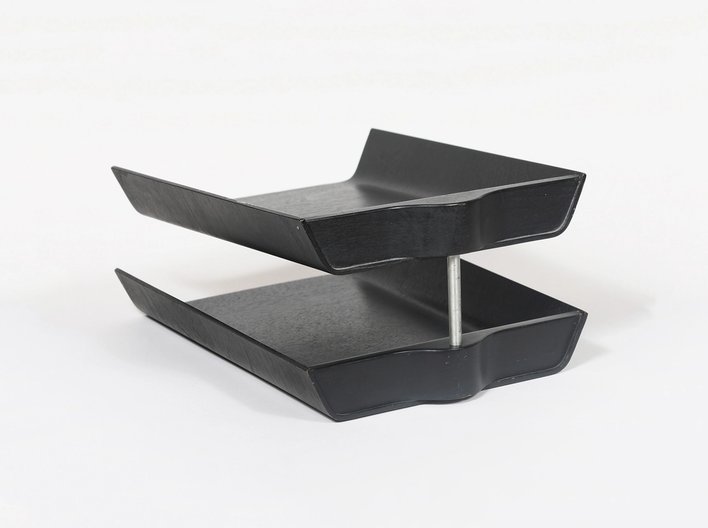
Florence Knoll | “Letter Tray”